Skyroam Coupon Code - TRAVELSPIRIT

The easiest way to stay online while Traveling
Friday, December 30, 2011


Thursday, December 29, 2011
Amr Diab - Father of Mediterranean Music?
Amr Abdol-Basset Abdol-Azeez Diab (Arabic: عمرو عبد الباسط عبد العزيز دياب; born October 11, 1961) is an Egyptian singer and composer of geel music; the contemporary face of Egyptian el-geel pop music, according to World Music. Diab is the best-selling Arab recording artist of all time, according to Let's Go Egypt. He was awarded the World Music Award for Best Selling Middle Eastern Artist four times: 1998, 2002, 2007 and 2009.He is currently one of the top singers in the Arab world, and considered a living legend by many of his fans in the Arab world.
Amr Diab is known as the Father of Mediterranean Music. He has created his own style which is often termed "Mediterranean Music" or "Mediterranean Sound", a blend of Western and Egyptian rhythms.
In The Mediterranean in Music, David Cooper and Kevin Dawe referred to his music as "the new breed of Mediterranean music".
According to author Michael Frishkopf, Amr Diab has produced a new concept of Mediterranean music, especially in his international hit, "Nour El Ain".
In his analysis of The Very Best of Amr Diab album, Victor W. Valdivia of Allmusic said: "His music melded traditional Arabic sounds and textures with Western rhythms and instruments. The mesh was dubbed Mediterranean music, and The Very Best of Amr Diab displays Diab's superb skill in creating it."
According to the BBC, Diab "has ruled the Arab music world, especially Egypt and the Middle East, since the mid '80s, continually breaking sales records". Wikipedia
amr diab - habibi ya nour al ain by kareem93
http://abdbda.deviantart.com/art/Amr-Diab-172209595


Tuesday, December 27, 2011

Monday, December 26, 2011
Direct line to God
An Australian decided to write a book about famous churches around the world. So he bought a plane ticket and took a trip to England thinking that he would start by working his way across Europe.
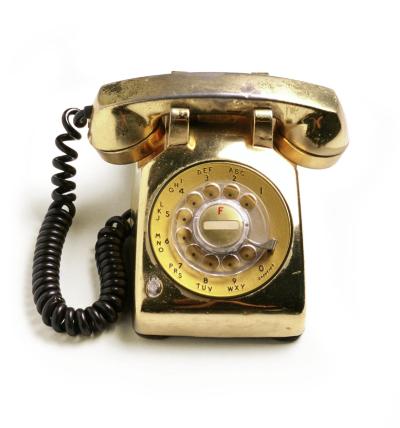
On his first day he was inside a church taking photographs when he noticed a golden telephone mounted on the wall with a sign that read "$10,000.00 per call".
The Australian, being intrigued, asked a priest who was strolling by what the telephone was used for.
The priest replied that it was a direct line to heaven and that for $10,000.00 you could talk to God.
The Australian thanked the priest and went on his way.
Next stop was in France. There, at a very large cathedral, he saw the same golden telephone with the same sign under it. He wondered if this was the same kind of telephone he saw in England and he asked a nearby nun what its purpose was.
She told him that it was a direct line to heaven and that for $10,000.00 he could talk to God.
"O.K., thank you," said the Australian.
He then travelled to Spain, Italy, Germany, Sweden and Czech Republic.
In every church he saw the same golden telephone with the same "$10,000.00 per call" sign under it. The Australian, upon leaving the Netherlands, decided to travel to Greece to see if Greeks had the same phone.
He arrived in Greece, and again, in the first church he entered, there was the same golden telephone, but this time the sign under it read, "40 cents per call."
The Australian was surprised so he asked the priest about the sign.
"Father, I've travelled all over Europe and I've seen this same golden telephone in many churches. I'm told that it is a direct line to Heaven, but in all of Europe the price was $10,000 per call.
Why is it so cheap here?"
The priest smiled and answered,
"You're in Greece now, my son - it's a local call."
http://globalgreekworld.blogspot.com/2010/04/global-greek-humour-youre-in-greece-now.html#ixzz1hhZJzKeo
Sunday, December 25, 2011
Snow brings Greece to a standstill
Hundreds of drivers remained trapped on Friday as a cold front of heavy snowfall and gale-force winds swept across several parts of central and northern Greece.
Emergency crews rescued more than 1,000 drivers trapped along the Egnatia Highway near the towns of Kozani and Grevana, but hundreds more remained confined to their cars.
Authorities opened up schools to host the vast amount of people who would otherwise have been forced to spend the night in their vehicles near the town of Kozani, in northern Greece.
Kilometre-long queues were reported on the motorway along Lamia as drivers had to reduce their speed or stop to fit snow chains.
Meanwhile, power cuts were reported in 15 villages near the town of Konitsa, 9 near Tsoumenka and 20 near the town of Karditsa, while schools in Kastoria, Grevena, Florina and Kozani were closed to students.
The sudden wintry weather, with strong winds and low temperatures, struck late on Wednesday as many people prepared to leave the Greek capital and head towards their hometowns, villages and islands for the Christmas break.
http://www.sott.net/articles/show/239239-Hundreds-trapped-as-snowfall-brings-part-of-Greece-to-standstill
 http://www.dailymail.co.uk/news/article-1344202/Pictures-snowman-built-Big-Freeze-An-inspiration-time.html
Emergency crews rescued more than 1,000 drivers trapped along the Egnatia Highway near the towns of Kozani and Grevana, but hundreds more remained confined to their cars.
Authorities opened up schools to host the vast amount of people who would otherwise have been forced to spend the night in their vehicles near the town of Kozani, in northern Greece.
Kilometre-long queues were reported on the motorway along Lamia as drivers had to reduce their speed or stop to fit snow chains.
Meanwhile, power cuts were reported in 15 villages near the town of Konitsa, 9 near Tsoumenka and 20 near the town of Karditsa, while schools in Kastoria, Grevena, Florina and Kozani were closed to students.
The sudden wintry weather, with strong winds and low temperatures, struck late on Wednesday as many people prepared to leave the Greek capital and head towards their hometowns, villages and islands for the Christmas break.
http://www.sott.net/articles/show/239239-Hundreds-trapped-as-snowfall-brings-part-of-Greece-to-standstill
White Xmas in Australia?

http://www.heraldsun.com.au/news/breaking-news/melbournes-west-hit-by-hailstones-but-new-years-eve-is-looking-hot/story-e6frf7jx-1226230231119

HAILSTONES the size of cricket balls, flash-flooding, planes diverted and flights postponed, power lost from homes, major transport delays and a tornado to top things off - that was Christmas Day in Melbourne.
Much of Victoria copped the extremes - from steamy, sultry weather for Christmas lunch to severe storms that left many residents struggling to compare them with anything in memory.
The volunteers who staff the State Emergency Service had little time to digest their lunch when the calls for help started arriving.
Melton, on Melbourne's western fringes, was the first to report hailstones at 3.30pm (AEDT).
Then the skies exploded over greater Melbourne, as lightning strikes, loud cracks of thunder, torrential rain and hailstones hammered the city.
By 9pm the SES had handled more than 2000 calls for assistance, mainly damage caused by hailstones to skylights and windows.
It may be a few days before the damage to motor vehicles can be assessed.
Much of Victoria remained at risk this evening, with severe weather warnings for Melbourne city fringe areas including Hurstbridge, Lilydale, Yarra Glen, Healesville, east of Mt Dandenong and south of Kinglake. Warnings were also issued for regional Victorian areas including Mildura, Horsham, Ballarat, Bendigo, Shepparton, Seymour, Maryborough, Geelong, Melbourne, Wangaratta, Traralgon and Bairnsdale.
And storm warnings were also issued for southern New South Wales and the ACT. The weather bureau said areas that could be affected included Canberra, Goulburn, Yass, Parkes, Wagga Wagga, Albury, Deniliquin, Griffith, Hay, Cobar, Wentworth and Balranald.
SES spokesman Lachlan Quick said reinforcements from SES branches in the Victoria's western districts would be drafted in on Monday to help with the huge clean-up in the north and northwest parts of the state.
He said most of the calls concerned smashed windows and skylights.
"There was a tornado reported at Fiskville and we know it touched down at Keilor Downs because we had some SES volunteers there and they had to run for shelter," Mr Quick said.
Bicycle paths along the Yarra will be closed on Monday as the river swells with floodwater.
Powercor, which provides electricity for those living in Melbourne's and the state's west, including Bendigo and Ballarat, reported more than 3300 people without power at 9pm along with damage to lines and power poles.
At Melbourne Airport international and domestic flights were diverted to Sydney because of strong winds and lightning, while planes that were due to fly out were grounded.
Passengers urged to contact their airline or the airport for further information.
Metro, which runs the Melbourne's train services, was warning commuters to expect major delays, with most lines disrupted, and had advised people to defer non-essential travel.
It said many of its pedestrian subways were under water.
VicRoads was reporting many roads closed in the worst-hit areas northwest of Melbourne because of flooding.
At Lilydale, in Melbourne's east, flooding caused the closure of the Warburton Highway.
The Bureau of Meteorology issued a minor flood warning at 8.30pm for the Merri Creek at Coburg and Fitzroy, saying the creek was rising quickly in those suburbs.
Saturday, December 24, 2011
Candles in the Orthodox Church
Question: Why do we light candles in the Orthodox Church?
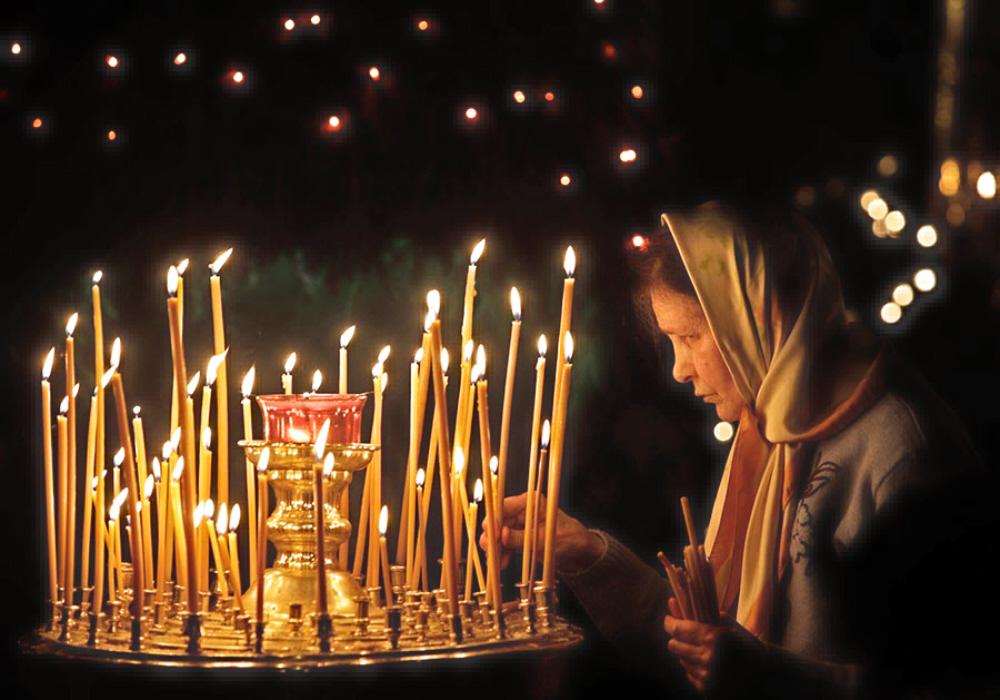
Answer: There are typically two types of candles that Orthodox are familiar with. First there are the genuine pure beeswax candles made from the combs of hives. Secondly, there are the paraffin wax candles made from petroleum. When the Fathers of the Church speak of the Orthodox use of candles, they are referring to the pure beeswax candles and not the latter. Paraffin wax produces carcinogens and soot when burned. In fact, one air quality researcher stated that the soot from a paraffin candle contains many of the same toxins produced by burning diesel fuel.
With this information in mind, we can better understand the six symbolic representations of lit candles handed down to us by Saint Symeon of Thessaloniki:
1. As the candle is pure (pure beeswax), so also should our hearts be pure.
2. As the pure candle is supple (as opposed to the paraffin), so also should our souls be supple until we make it straight and firm in the gospel.
3. As the pure candle is derived from the pollen of a flower and has a sweet scent, so also should our souls have the sweet aroma of Divine Grace.
4. As the candle, when it burns, mixes with and feeds the flame, so also we can struggle to achieve theosis.
5. As the burning candle illuminates the darkness, so must the light of Christ within us shine before men that God's name be glorified.
6. As the candle gives its own light to illuminate a man in the darkness, so also must the light of the virtues, the light of love and peace, characterize a Christian. The wax that melts symbolizes the flame of our love for our fellow men.
Besides the six symbolic representation above, Saint Nikodemos the Hagiorite gives us six different reasons why Orthodox light candles:
1. To glorify God, who is Light, as we chant in the Doxology: "Glory to God who has shown forth the light..."
2. To dissolve the darkness of the night and to banish away the fear which is brought on by the darkness.
3. To manifest the inner joy of our soul.
4. To bestow honor to the saints of our Faith, imitating the early Christians of the first centuries who lit candles at the tombs of the martyrs.
5. To symbolize our good works, as the Lord said: "Let your light so shine before men, that they may see your good works and glorify your Father who is in the heavens." The priest also gave us this charge following our baptism.
6. To have our own sins forgiven and burned away, as well as the sins of those for whom we pray.
For all these reasons cited by our Holy Fathers, let us often light our candles and make sure as much as possible that they be pure candles. We should abstain from all corruption and uncleanness, so that all of the above symbolism is made real in our Christian lives.
At one point during the Presanctified Divine Liturgy the liturgist holds a lit candle, and facing the people he proclaims: "The light of Christ shines on all". Christ is "the true light who enlightens and sanctifies all men". Are we worthy recipients of this light? The saints themselves constantly sought after this light. Let us then also imitate the saints and like Saint Gregory Palamas continuously supplicate the Lord in the following words: "Enlighten my darkness".
http://www.johnsanidopoulos.com/2010/02/use-of-candles-in-orthodox-church.html

Answer: There are typically two types of candles that Orthodox are familiar with. First there are the genuine pure beeswax candles made from the combs of hives. Secondly, there are the paraffin wax candles made from petroleum. When the Fathers of the Church speak of the Orthodox use of candles, they are referring to the pure beeswax candles and not the latter. Paraffin wax produces carcinogens and soot when burned. In fact, one air quality researcher stated that the soot from a paraffin candle contains many of the same toxins produced by burning diesel fuel.
With this information in mind, we can better understand the six symbolic representations of lit candles handed down to us by Saint Symeon of Thessaloniki:
1. As the candle is pure (pure beeswax), so also should our hearts be pure.
2. As the pure candle is supple (as opposed to the paraffin), so also should our souls be supple until we make it straight and firm in the gospel.
3. As the pure candle is derived from the pollen of a flower and has a sweet scent, so also should our souls have the sweet aroma of Divine Grace.
4. As the candle, when it burns, mixes with and feeds the flame, so also we can struggle to achieve theosis.
5. As the burning candle illuminates the darkness, so must the light of Christ within us shine before men that God's name be glorified.
6. As the candle gives its own light to illuminate a man in the darkness, so also must the light of the virtues, the light of love and peace, characterize a Christian. The wax that melts symbolizes the flame of our love for our fellow men.
Besides the six symbolic representation above, Saint Nikodemos the Hagiorite gives us six different reasons why Orthodox light candles:
1. To glorify God, who is Light, as we chant in the Doxology: "Glory to God who has shown forth the light..."
2. To dissolve the darkness of the night and to banish away the fear which is brought on by the darkness.
3. To manifest the inner joy of our soul.
4. To bestow honor to the saints of our Faith, imitating the early Christians of the first centuries who lit candles at the tombs of the martyrs.
5. To symbolize our good works, as the Lord said: "Let your light so shine before men, that they may see your good works and glorify your Father who is in the heavens." The priest also gave us this charge following our baptism.
6. To have our own sins forgiven and burned away, as well as the sins of those for whom we pray.
For all these reasons cited by our Holy Fathers, let us often light our candles and make sure as much as possible that they be pure candles. We should abstain from all corruption and uncleanness, so that all of the above symbolism is made real in our Christian lives.
At one point during the Presanctified Divine Liturgy the liturgist holds a lit candle, and facing the people he proclaims: "The light of Christ shines on all". Christ is "the true light who enlightens and sanctifies all men". Are we worthy recipients of this light? The saints themselves constantly sought after this light. Let us then also imitate the saints and like Saint Gregory Palamas continuously supplicate the Lord in the following words: "Enlighten my darkness".
http://www.johnsanidopoulos.com/2010/02/use-of-candles-in-orthodox-church.html
Xmas in Greece
Christmas in Greece
St. Nicholas is important in Greece as the patron saint of sailors. According to Greek tradition, his clothes are drenched with brine, his beard drips with seawater, and his face is covered with perspiration because he has been working hard against the waves to reach sinking ships and rescue them from the angry sea. Greek ships never leave port without some sort of St. Nicholas icon on board.
On Christmas Eve small boys to the beating of drums and the tinkling of triangles usually sing carols. They go from house to house and are given dried figs, almonds, walnuts and lots of sweets or sometimes small gifts.
After 40 days of fasting, the Christmas feast is looked forward to with great anticipation by adults and children alike. Pigs are slaughtered and on almost every table are loaves of christopsomo or "Christ Bread". This bread is made in large sweet loaves of various shapes and the crusts are engraved and decorated in some way that reflects the family's profession.
Christmas trees are not commonly used in Greece. In almost every home the main symbol of the season is a shallow wooden bowl with a piece of wire is suspended across the rim; from that hangs a sprig of basil wrapped around a wooden cross. A small amount of water is kept in the bowl to keep the basil alive and fresh. Once a day, a family member, usually the mother, dips the cross and basil into some holy water and uses it to sprinkle water in each room of the house. This ritual is believed to keep the Killantzaroi away from the house.
There is a tradition kallikantzeri, where the mischievous goblins appear from the earth during the 12 days of Christmas.
At Christmas very few presents are given to each other. Instead, small gifts are given to hospitals and orphanages.
Priests sometimes go from house to house sprinkling holy water around to get rid of the bad spirits who may be hiding in people's houses.
In most Greek homes an evergreen tree is decorated with tinsel and a star placed on top. Gifts are exchanged on January 1st, St Basil's Day.
On Christmas Eve, groups of people gather around the holiday table. Figs, dried on rooftops are served with the spicy golden Chrisopsomo bread.
As people are they greet one another by saying Hronia polla or many happy years. The table filled with food may include such dishes as kourambiethes, a Greek nut cookie.
http://www.santas.net/favorites.htm

St. Nicholas is important in Greece as the patron saint of sailors. According to Greek tradition, his clothes are drenched with brine, his beard drips with seawater, and his face is covered with perspiration because he has been working hard against the waves to reach sinking ships and rescue them from the angry sea. Greek ships never leave port without some sort of St. Nicholas icon on board.
On Christmas Eve small boys to the beating of drums and the tinkling of triangles usually sing carols. They go from house to house and are given dried figs, almonds, walnuts and lots of sweets or sometimes small gifts.
After 40 days of fasting, the Christmas feast is looked forward to with great anticipation by adults and children alike. Pigs are slaughtered and on almost every table are loaves of christopsomo or "Christ Bread". This bread is made in large sweet loaves of various shapes and the crusts are engraved and decorated in some way that reflects the family's profession.
Christmas trees are not commonly used in Greece. In almost every home the main symbol of the season is a shallow wooden bowl with a piece of wire is suspended across the rim; from that hangs a sprig of basil wrapped around a wooden cross. A small amount of water is kept in the bowl to keep the basil alive and fresh. Once a day, a family member, usually the mother, dips the cross and basil into some holy water and uses it to sprinkle water in each room of the house. This ritual is believed to keep the Killantzaroi away from the house.
There is a tradition kallikantzeri, where the mischievous goblins appear from the earth during the 12 days of Christmas.
At Christmas very few presents are given to each other. Instead, small gifts are given to hospitals and orphanages.
Priests sometimes go from house to house sprinkling holy water around to get rid of the bad spirits who may be hiding in people's houses.
In most Greek homes an evergreen tree is decorated with tinsel and a star placed on top. Gifts are exchanged on January 1st, St Basil's Day.
On Christmas Eve, groups of people gather around the holiday table. Figs, dried on rooftops are served with the spicy golden Chrisopsomo bread.
As people are they greet one another by saying Hronia polla or many happy years. The table filled with food may include such dishes as kourambiethes, a Greek nut cookie.
http://www.santas.net/favorites.htm
Tracking Santa Claus Online
Countdown to Track Santa
Welcome to the North Pole! Santa’s helpers are getting gifts ready for delivery to the good boys and girls around the world. Can you find which shop in the village is busiest today? When you do, click on that shop to discover a fun activity inside!
Why we track Santa
For more than 50 years, NORAD and its predecessor, the Continental Air Defense Command (CONAD) have tracked Santa’s flight.
The tradition began in 1955 after a Colorado Springs-based Sears Roebuck & Co. advertisement for children to call Santa misprinted the telephone number. Instead of reaching Santa, the phone number put kids through to the CONAD Commander-in-Chief’s operations "hotline." The Director of Operations at the time, Colonel Harry Shoup, had his staff check the radar for indications of Santa making his way south from the North Pole. Children who called were given updates on his location, and a tradition was born.

In 1958, the governments of Canada and the United States created a bi-national air defense command for North America called the North American Aerospace Defense Command, also known as NORAD, which then took on the tradition of tracking Santa.
Since that time, NORAD men, women, family and friends have selflessly volunteered their time to personally respond to phone calls and emails from children all around the world. In addition, we now track Santa using the Internet. Millions of people who want to know Santa’s whereabouts now visit the NORAD Tracks Santa website.
Finally, media from all over the world rely on NORAD as a trusted source to provide updates on Santa’s journey.
http://www.noradsanta.org/en/track3d.html
Welcome to the North Pole! Santa’s helpers are getting gifts ready for delivery to the good boys and girls around the world. Can you find which shop in the village is busiest today? When you do, click on that shop to discover a fun activity inside!
Why we track Santa
For more than 50 years, NORAD and its predecessor, the Continental Air Defense Command (CONAD) have tracked Santa’s flight.
The tradition began in 1955 after a Colorado Springs-based Sears Roebuck & Co. advertisement for children to call Santa misprinted the telephone number. Instead of reaching Santa, the phone number put kids through to the CONAD Commander-in-Chief’s operations "hotline." The Director of Operations at the time, Colonel Harry Shoup, had his staff check the radar for indications of Santa making his way south from the North Pole. Children who called were given updates on his location, and a tradition was born.

In 1958, the governments of Canada and the United States created a bi-national air defense command for North America called the North American Aerospace Defense Command, also known as NORAD, which then took on the tradition of tracking Santa.
Since that time, NORAD men, women, family and friends have selflessly volunteered their time to personally respond to phone calls and emails from children all around the world. In addition, we now track Santa using the Internet. Millions of people who want to know Santa’s whereabouts now visit the NORAD Tracks Santa website.
Finally, media from all over the world rely on NORAD as a trusted source to provide updates on Santa’s journey.
http://www.noradsanta.org/en/track3d.html
Friday, December 23, 2011
Christmas Countdown 2011 - Find out how many days until Christmas 2011
Christmas Countdown 2011 - Find out how many days until Christmas 2011: Set www.xmasclock.com as your homepage to count the number of days until Christmas 2011!
Subscribe to:
Posts (Atom)