Skyroam Coupon Code - TRAVELSPIRIT

The easiest way to stay online while Traveling
Sunday, August 19, 2012


Saturday, August 18, 2012
Twin Flames and Soul Mates
“Our point here, is that if you find yourself in Solitude, recognize its purpose. If you are in a relationship refine it in beauty to the greater love of non-dependence. You will indeed discover the love expands and the relationship becomes more splendid in non dependency; just as you are discovering relationships of co-dependency are imbalanced one way streets, and fail.
In this time, in this now, many of you are actually merging with your etheric (non-physical) twin flame, and molding your sacred fullness into one physicality in order for you to enter the crystalline realm in wholeness. In most cases this soul reconnection is accomplished in solitude or in sovereign non dependent relationships.” ~ Metatron/ James Tyberonn

Friday, August 17, 2012
Greece unsafe for Immigrants
BANGKOK, 17 August 2012 (IRIN) - Human rights groups have condemned recent police crackdowns in Greece on undocumented migrants, inhumane detention conditions, and hate crimes committed with impunity.
The Greek authorities began a crackdown on irregular migrants in the capital, Athens, in early August, when the Hellenic Police - the Greek police force - arrested 7,754 migrants, 1,656 of whom were taken to detention centres for being in the country illegally.
“Greece has the right to enforce its immigration laws and after a fair process, to deport people with no legal basis to stay in the country,” said Benjamin Ward, deputy director of the Europe and Central Asia division of Human Rights Watch. “But it doesn't have the right to treat people like criminals, or to presume irregular immigration status just because of their race or ethnicity.”
In the first quarter of 2012 some 64 percent of all irregular migrants in the European Union (EU) entered through illegal border crossings from Greece, according to the European Agency for the Management of Operational Cooperation at the External Borders of the Member States of the European Union (FRONTEX).
In 2010 irregular migrants made up almost 10 percent of Greece’s population of 11 million - some 810,000 people - according to government figures and the Organization for Economic Cooperation and Development (OECD).
“As Greece seems to be the easier door to Europe, more and more people will try to pass here,” commented Nikitas Kanakis, director of the Athens-based NGO, Médecins du Monde (MDM), which runs a free health clinic for undocumented migrants in the capital. “But the combination of the lack of services and a [restrictive] immigration policy, with the deep economic and social crisis [in Greece]… creates an unsafe environment for migrants.”
Most of the irregular migrants in Greece are stranded there because they do not have the money to move on, and a “dysfunctional” system for processing asylum seekers, according to the UN Refugee Agency (UNHCR). Only 2,860 of the more than 10,000 applications for asylum and 47,000 appeals filed in 2010 were successful.
The agency also noted that in the first half of 2011, the Greek authorities arrested some 57,000 undocumented migrants, most of whom were deported without any effort to assess their circumstances or standing.
Migrants who escape arrest and deportation increasingly risk violence and racism in a country that is suffering its worst economic crisis in decades. “Undocumented migrants in Greece are not in a position to cover many of their basic needs,” said Tassos Yphantis, a social worker at MDM, which treated some 300 attack victims in the first half of 2011.
“Most of them are homeless or live in large groups in congested apartments with no access to primary healthcare. Their everyday life is guided by fear of arrest or attacks motivated by racism,” he said.
UNHCR, the National Commission for Human Rights, and 19 groups that constitute the Racist Violence Recording Network, condemned a fatal attack on a young Iraqi on 12 August and called on the government to end the impunity of hate-based crimes. Racist attacks against migrants and refugees are “an almost daily phenomenon”, they said.
A 16-year-old migrant, who escaped from Afghanistan when the Taliban forcibly recruited his elder brother, reached Greece with the help of a smuggler after 35 days of hard travel through Iran and Turkey. He was given a six-month temporary permit after applying for asylum and now lives in a public park in Athens with other Afghan migrants. “A bus conductor removed by force my permit documents for not paying a bus ticket,” he said. “When I protested I was taken to the police station and my permit was confiscated.”.
Human rights groups have condemned the recent crackdown as discriminatory and have warned against inhumane detention conditions.
“Undocumented immigrants are normally held inside police stations, which are indeed overcrowded and unable to accommodate the numbers we get,” Christos Manouras, deputy lieutenant and spokesperson for the Hellenic Police, told IRIN.
But things are changing. “Migrants are being transferred to newly built detention centres [in Athens and also near the border with Turkey] to avoid congesting police premises. Those detention centres follow international standards and host migrants who do not qualify for asylum and are awaiting repatriation.”
On 31 July, the International Organization for Migration (IOM) and the Greek authorities signed an agreement to offer “assisted voluntary return” to some 7,000 undocumented migrants in Greece in the next 12 months.
The US$12 million project, funded by the European Return Fund with 25 percent participation by the Greek government, will offer a small number of migrants reintegration support in their home countries.
“Greece is under tremendous pressure from the influx of migrants crossing our borders. It is not a Greek but a European problem, and should be dealt with as such,” said police spokesperson Manouras. “The assisted voluntary returns will help fight the organized crime of human traffickers and ensure a dignified return for the migrants.”
http://www.irinnews.org/Report/96123/MIGRATION-Greece-an-unsafe-environment-for-migrants
The Greek authorities began a crackdown on irregular migrants in the capital, Athens, in early August, when the Hellenic Police - the Greek police force - arrested 7,754 migrants, 1,656 of whom were taken to detention centres for being in the country illegally.
“Greece has the right to enforce its immigration laws and after a fair process, to deport people with no legal basis to stay in the country,” said Benjamin Ward, deputy director of the Europe and Central Asia division of Human Rights Watch. “But it doesn't have the right to treat people like criminals, or to presume irregular immigration status just because of their race or ethnicity.”
In the first quarter of 2012 some 64 percent of all irregular migrants in the European Union (EU) entered through illegal border crossings from Greece, according to the European Agency for the Management of Operational Cooperation at the External Borders of the Member States of the European Union (FRONTEX).
In 2010 irregular migrants made up almost 10 percent of Greece’s population of 11 million - some 810,000 people - according to government figures and the Organization for Economic Cooperation and Development (OECD).
“As Greece seems to be the easier door to Europe, more and more people will try to pass here,” commented Nikitas Kanakis, director of the Athens-based NGO, Médecins du Monde (MDM), which runs a free health clinic for undocumented migrants in the capital. “But the combination of the lack of services and a [restrictive] immigration policy, with the deep economic and social crisis [in Greece]… creates an unsafe environment for migrants.”
Most of the irregular migrants in Greece are stranded there because they do not have the money to move on, and a “dysfunctional” system for processing asylum seekers, according to the UN Refugee Agency (UNHCR). Only 2,860 of the more than 10,000 applications for asylum and 47,000 appeals filed in 2010 were successful.
The agency also noted that in the first half of 2011, the Greek authorities arrested some 57,000 undocumented migrants, most of whom were deported without any effort to assess their circumstances or standing.
Migrants who escape arrest and deportation increasingly risk violence and racism in a country that is suffering its worst economic crisis in decades. “Undocumented migrants in Greece are not in a position to cover many of their basic needs,” said Tassos Yphantis, a social worker at MDM, which treated some 300 attack victims in the first half of 2011.
“Most of them are homeless or live in large groups in congested apartments with no access to primary healthcare. Their everyday life is guided by fear of arrest or attacks motivated by racism,” he said.
UNHCR, the National Commission for Human Rights, and 19 groups that constitute the Racist Violence Recording Network, condemned a fatal attack on a young Iraqi on 12 August and called on the government to end the impunity of hate-based crimes. Racist attacks against migrants and refugees are “an almost daily phenomenon”, they said.
A 16-year-old migrant, who escaped from Afghanistan when the Taliban forcibly recruited his elder brother, reached Greece with the help of a smuggler after 35 days of hard travel through Iran and Turkey. He was given a six-month temporary permit after applying for asylum and now lives in a public park in Athens with other Afghan migrants. “A bus conductor removed by force my permit documents for not paying a bus ticket,” he said. “When I protested I was taken to the police station and my permit was confiscated.”.
Human rights groups have condemned the recent crackdown as discriminatory and have warned against inhumane detention conditions.
“Undocumented immigrants are normally held inside police stations, which are indeed overcrowded and unable to accommodate the numbers we get,” Christos Manouras, deputy lieutenant and spokesperson for the Hellenic Police, told IRIN.
But things are changing. “Migrants are being transferred to newly built detention centres [in Athens and also near the border with Turkey] to avoid congesting police premises. Those detention centres follow international standards and host migrants who do not qualify for asylum and are awaiting repatriation.”
On 31 July, the International Organization for Migration (IOM) and the Greek authorities signed an agreement to offer “assisted voluntary return” to some 7,000 undocumented migrants in Greece in the next 12 months.
The US$12 million project, funded by the European Return Fund with 25 percent participation by the Greek government, will offer a small number of migrants reintegration support in their home countries.
“Greece is under tremendous pressure from the influx of migrants crossing our borders. It is not a Greek but a European problem, and should be dealt with as such,” said police spokesperson Manouras. “The assisted voluntary returns will help fight the organized crime of human traffickers and ensure a dignified return for the migrants.”
http://www.irinnews.org/Report/96123/MIGRATION-Greece-an-unsafe-environment-for-migrants
Thursday, August 16, 2012
The power of Love
POWER OF LOVE (from "Antigone")
by: Sophocles
LOVE, thou art victor in fight: thou mak'st all things afraid;
Thou couchest thee softly at night on the cheeks of a maid;
Thou passest the bounds of the sea, and the folds of the fields;
To thee the immortal, to thee the ephemeral yields;
Thou maddenest them that possess thee; thou turnest astray
The souls of the just, to oppress them, out of the way;
Thou hast kindled amongst us pride, and the quarrel of kin;
Thou art lord, by the eyes of a bride, and the love-light therein;
Thou sittest assessor with Right; her kingdom is thine,
Who sports with invincible might, Aphrodite divine.
This English translation, by Sir George Young, of 'Power of Love' is reprinted from Greek Poets in English Verse. Ed. William Hyde Appleton. Cambridge: The Riverside Press, 1893.

Wednesday, August 15, 2012
Attacks on Immigrants
Anti-immigrant party office in Greece firebombed, Associated Press, August 13, 2012
ATHENS, Greece (AP) — Authorities say arsonists have firebombed an Athens office of a far-right, anti-immigrant party, a day after the suspected racist murder of an Iraqi man in the Greek capital.
The fire brigade says nobody was hurt in Monday’s attack on the Golden Dawn facility in the central Pangrati area. The assailants escaped arrest.
The party, which rejects the neo-Nazi label, won 18 of the Greek Parliament’s 300 seats in June elections by running on an anti-immigration, nationalist platform.
Debt-crippled Greece is the European Union’s main entry point for illegal immigrants.
Debt-crippled Greece is the European Union’s main entry point for illegal immigrants.
The government has sought to blunt Golden Dawn’s rising influence by placing illegal immigrants in detention camps pending their deportation.
The party’s ascendance has been coupled with growing reports of attacks on immigrants. The Iraqi’s attackers remain at large and unidentified.
According to most of the media, Greece’s misery and unrest is completely due to its economic situation, which is certainly very bad. But not everyone agrees with that characterization, clearly, when an official calls the unwanted influx the nation’s “greatest invasion ever.” Greece is the on-ramp of Europe, whereillegals find it easy to enter Europe from Africa and Asia. It’s estimated that 10 percent of residents are illegal aliens, and many are young men of employable age — that’s rough in a country where the most recent unemployment rate was 23.1 percent (May). More than half of young people under 25 are jobless — 54.9 percent.

Greek dominance in World shipping
Over 100 German ship funds have already shut down as the long-simmering crisis in global container shipping finally comes to a head. A further 800 funds are threatened with insolvency, according to consultants TPW in Hamburg.
They are not alone. Britain’s oldest shipowner, Stephenson Clark, dating back to 1730, went into liquidation last week, closing the final chapter of Britain’s coal trade and the industrial revolution.
It cited “incredibly depressed” vessel rates. The firm over-invested in the boom four years ago, betting too much on the China syndrome.
Germany is the superpower of container shipping, controlling almost 40pc of the world market. The Germans also misread the cycle and have been struggling to cope ever since with a legacy of debt and a glut of ships. Now everything is going wrong at once.
Container volumes arriving at European ports plunged in June, dashing expectations of a summer rebound. Imports fell 7.5pc from North America and 9pc from Asia. Flows into the Mediterranean region crashed by 16pc, reflecting the violence of the recession in Greece, Italy, Spain, and Portugal.

Buckling trade is the coup de grace for countless shippers still clinging on by their finger tips. “The market is barely paying above operating cost. If you are loaded with debt, you are in trouble,” said Martin Smith from ship operators Norddeutsche Vermögen in Hamburg.
It is much same story in the Pacific region where Danish shipper Maersk said that it is losing over $200 for every container on the Qingdao-Melbourne route. But what the Germans face is the double-whammy of a funding squeeze.
“If you don’t have a line of credit already, nobody is going to give you one. We’re suffering a liquidity crisis, and its almost impossible for single vessel owners,” said Mr Smith.
Commerzbank – the world’s second-biggest provider of ship finance, and reluctant owner of a flotilla of foreclosed ships – said it is shutting down its €20bn (£15.7bn) ship funding operations entirely to “minimise risk and capital lock-up” under tougher EU banking rules.
Monday, August 13, 2012
Saturday, August 11, 2012
Greek Auction to raise money to pay debt
Greece, starved of financing options, will step up its treasury bill issuance on Tuesday, offering an unusually large amount so it can meet looming redemptions on Aug. 20 and fund its cash needs until it secures further aid from its international creditors. The auction, which could raise up to €5 billion ($6.15 billion), is likely to meet decent demand despite Greece's precarious government finances, because this short-term debt is accepted as collateral by the European Central Bank. Greek banks, keen to access ECB emergency facilities, are likely to snap up the new paper. The Greek Public Debt Management Agency said it would auction €3.125 billion of 13-week treasury bills next week. Two noncompetitive auction rounds, if exercised to the maximum allowed amount, could bring the total to €5 billion. The country sold 26-week treasury bills this week, through which it raised €1 billion. Greece was left with no options other than to increase its auction sizes after its euro-zone partners declined to provide it with a bridge loan until a disbursement of crucial aid in coming months. Greece is in talks with international creditors—the European Union, the International Monetary Fund and the ECB—on a package of new austerity measures of €11.5 billion, a requirement for Greece to receive its next €31 billion aid installment. A decision by creditors on whether the country is eligible for the funds won't be made until October. Raising €5 billion next week would allow Greece to repay creditors and meet general financing needs. Greece must repay €3.1 billion of debt on Aug. 20, mostly to the ECB. According to RBC Capital Markets analysts, €670 million of coupon payments add to its payment duties.

http://online.wsj.com
Write to Emese Bartha at emese.bartha@dowjones.com
Mount Athos on fire

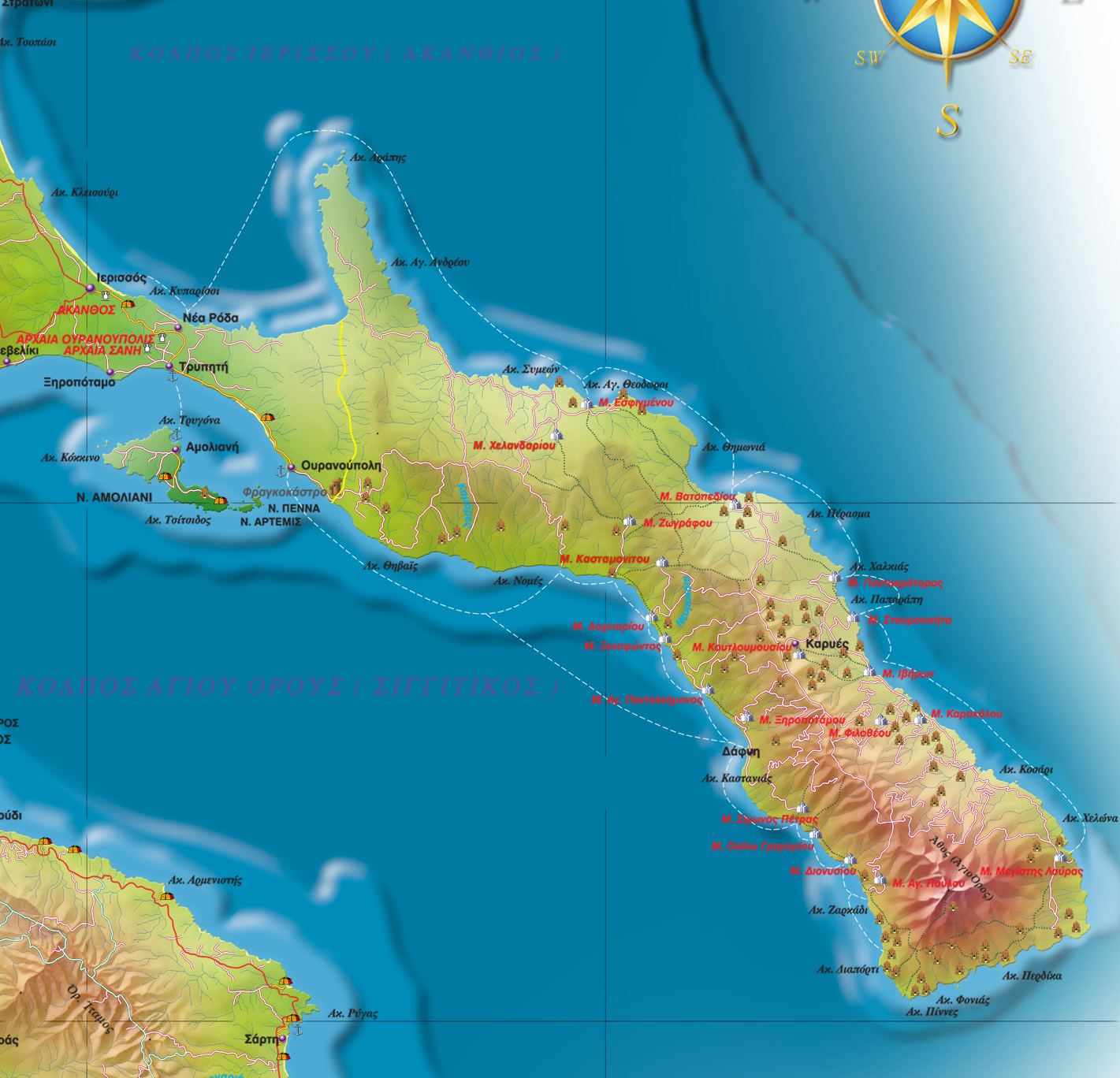
THESSALONIKI, Greece - A large forest fire that broke out at a remote monastic community in Greece where women have not been allowed for a thousand years spread Thursday to a nearby resort area, forcing the evacuation of a seaside vacation village and sending up a thick pall of smoke over the area.
It was not clear how the fire started Wednesday on the Mount Athos peninsula, a World Heritage site and self-ruled community of Orthodox monks that bans women — and even female animals — from entering. Officials said no damage was caused to the northern Greek peninsula's 20 medieval monasteries, which visitors can only access by sea.
Firefighters managed to prevent the flames from sweeping through Ouranoupolis, a resort village north of the rugged, densely-wooded northern Greek peninsula, on Thursday, although the fire damaged outlying building and elderly people and others were taken to a nearby beach as a precaution. The fire brigade said in a statement that 130 firefighters, assisted by dozens of volunteers and soldiers, water trucks, five water-dropping aircraft and two helicopters were trying to contain the blaze.
The fire brigade said the conflagration started in a remote area in the vicinity of the Serbian Hilandar Monastery, the peninsula's northernmost monastery and one that was badly damaged by fire in 2004. It was unclear how it started, and no immediate estimate was available on the extent of the burned area.
Greece is in the grips of a heat wave, and wildfires have been burning around the country.
Elsewhere, firefighters were trying to extinguish two big fires in the areas of Tripoli and Corinth, in the southern Peloponnese area, which broke out Tuesday and destroyed thousands of acres of forest and shrubbery. Officials said no inhabited areas were under threat, and the blazes seemed to be on the wane Thursday.
A 45-year-old Greek man was arrested and charged with accidentally starting a fire in the Tripoli area.
Forest fires are common during Greece's typically long, hot summers. In 2007, more than 60 people died in a series of huge blazes in the Peloponnese and central Greece.
Read more: http://www.montrealgazette.com/news/Forest+fire+forces+Greek+authorities+partially+evacuate+northern/7061290/story.html#ixzz23DfPLXiY
Friday, August 10, 2012
Thursday, August 9, 2012
Subscribe to:
Posts (Atom)