Skyroam Coupon Code - TRAVELSPIRIT

Skyroam Coupon Code - TRAVELSPIRIT
The easiest way to stay online while Traveling

Sunday, August 1, 2010

Greek Truckers strike forces military into action


ATHENS — Greece dispatched military trucks Friday to alleviate a nationwide fuel shortage caused by striking truckers which has disrupted freight transport and travel in the busy tourist season.
"The armed forces with their own means are already assuring the supply of critical sectors such as airports, electricity plants and hospitals," the government said after a crisis cabinet meeting.
"Navy landing craft will also contribute if necessary to cover the needs of islands by transporting tanker trucks," it added.
The authorities, which had issued a civil mobilisation order on Wednesday that the strikers ignored, added that truckers who continued to defy the law would be prosecuted and their operating licenses could be forfeited.
Five people including a policeman were injured on Thursday in a clash between striking truckers and riot police outside a refinery near Thessaloniki, northern Greece, the semi-state Athens News Agency reported.
"We exhausted every limit of good faith," Transport Minister Dimitris Reppas said after the cabinet meeting.
"The state is not unfortified and society is not defenceless," he said.
The truckers, who have blocked most fuel deliveries since Sunday, had earlier decided to maintain their protest against government plans to liberalise the sector and reduce freight costs as Greece battles an unprecedented financial crisis.
"We will continue (the strike) in dynamic fashion," the head of the Greek truck owners confederation, George Tzortzatos, told reporters after a union meeting. A few hundred strikers later marched on parliament.
The government on Wednesday told the truckers to go back to work under a requisition order over growing concerns about fuel, food and medicine supplies and the fate of hundreds of thousands of Greeks and foreigners whose travel plans have been thrown into disarray.
But the process began haltingly with only a few hundred civil mobilisation orders so far handed out in each of the country's regions.

Congrats Chelsea


Rhinebeck, New York, (AFP) - Chelsea Clinton married her longtime boyfriend Marc Mezvinsky Saturday evening, the Clinton family said, ending weeks of secretive build-up about the former first daughter’s wedding.
"Today, we resident Bill Clinton and Secretary of State Hillary Clinton said in a statement.
"We could not have asked for a more perfect day to celebrate the beginning of their life together, and we are so happy to welcome Marc into our family."

Friday, July 30, 2010

Copeman's Greek Dance Notebook


Karsilamas

 a famous "karsilama" played by "maliétès", greco-turkish band based in France - live in Strasbourg, 2006
http://myspace.com/malietes


Wednesday, July 28, 2010

The Cosmos


"Our loyalties are to the species and the planet. We speak for Earth. Our obligation to survive is owed not just to ourselves but also to that Cosmos, ancient and vast, from which we spring."
. . . Dr. Carl Sagan
The Cosmos

Prinkipessa - Eleni Bitali - FONARA Megali !!!!!

Visual Greek


Yes! A way for visual learners to learn how to read and enjoy the Bible in Greek!
Also, be sure to visit this site: GreekBibleStudy.org

Devour these cartoons—and you will be equipped to read
4 out of 5 words in the Greek New Testament!

(110,425 out of the 138,162 total words in the book!)

Theo's Restaurant

                                                                                                    Theo's Restaurant,
687 Main Street, Penticton, BC Canada

FUN GREEK


Author/Inventor Mike Ellis brings you Fun Greek. He's erasing Greek and replacing it with English words enabling anyone to speak Greek.
The Fun Greek phrases below only need a simple set of directions. Say each large phrase quickly and smoothly with emphasis on the red word or object. The translation and sound byte are found underneath. That's all there is to Fun Greek.


Archangel Michael

The Holy Archangel Michael is one of the most celebrated of the Angels and bodiless powers; he is called the Archistrategos, or chief commander, of all the bodiless powers. According to Holy Scripture and Tradition, he has interceded for humanity multiple times and continues to serve as the Defender of the Faith. St Michael is most often invoked for protection from invasion by enemies and from civil war, and for the defeat of adversaries on the field of battle. He is celebrated primarily on November 8, the Synaxis of Michael and all the Bodiless Powers of Heaven; September 6 also marks the miracle of the Archangel at Colossae.
The name Michael means "like unto God" or "Who is like unto God?"
Michael first appears in the Old Testament in the book of Joshua's account of the fall of Jericho. Though Michael is not mentioned by name in the text, it is said that Joshua "looked up and saw a man standing in front of him with a drawn sword in his hand." When the still unaware Joshua asks which side of the fight the Archangel is on, Michael responds, "neither...but as commander of the army of the Lord I have now come" (Joshua 5:13-14)1.
In the book of Daniel, Michael appears first to help the Archangel Gabriel defeat the Persians (10:13). In a later vision it is revealed to Daniel that "at that time [the end times] Michael, the great prince who protects your people, will arise. There will be a time of distress such as has not happened from the beginning of nations until then..." (Ch. 12)1. Michael thus plays an important role as the protector of Israel and later of his chosen people, the Church.

In New Testament times, the holy Archangel Michael showed his power when he miraculously saved a young man, cast into the sea by robbers with a stone about his neck on the shores of Mt Athos. This story is found in the Athonite Paterikon, and in the Life of St Neophytus of Docheiariou (November 9).
Perhaps his most famous miracle, though, is the salvation of the church at Colossae. Here a number of pagans tried to destroy this church by diverting the flow of two rivers directly into its path. However, the Archangel appeared amongst the waters, and, carrying a cross, channeled the rivers underground so that the ground the church stood on would not be destroyed. The spring which came forth after this event is said to have special healing powers.
Michael also has been associated with healing in other cases, as well as his primary role as leader of the Church Militant. He has been said to appear to Emperor Constantine the Great (d. 337) at Constantinople, to have intervened in assorted battles, and appeared, sword in hand, over the mausoleum of Hadrian, in apparent answer to the prayers of Pope St. Gregory I the Great (r. 590-604) that a plague in Rome should cease.
http://orthodoxwiki.org/Archangel_Michael

Window to heaven


 Icon - Archangel Michael

Biography of Aidan Hart

Aidan was born in England in 1957 and grew up in New Zealand. There he worked as a full-time sculptor after completing a degree in English literature. At the age of twenty-five, after becoming a member of the Orthodox Church and returning to live in England, he began painting and carving icons, which he has been doing professionally ever since.

His commissioned work has been primarily for panel icons, which are painted in the traditional way in egg tempera, but has also frescoed churches, illuminated on vellum and carved work in stone and wood for churches. He has over 700 commissioned works in private and church collections in over 15 countries of the world.

He has had numerous articles published on the subjects of iconography, ecology and Orthodox spirituality, has curated four icon exhibitions, and is a visiting tutor to The PrinceÕs School of Traditional Arts, London. He has spent a total of two years on Mount Athos, mainly at the Holy Monastery of Iviron.


Enquiries and orders for Icons
Aidan accepts orders for panel icons, frescoes, illuminated manuscript work, wood and stone carving, church interior consultation, and sculpture. You are very welcome to contact him with your enquiry by email at mail@aidanharticons.com or by phone or letter (see below for details).

Maria Solomou


XFactor 2010 in Cyprus


Ξεκίνησαν τα γυρίσματα του X-Factor 3 και σύσσωμη η ομάδα των κριτών που παραμένει ίδια με πέρυσι ταξίδεψε στην Κύπρο για τις οντισιόν οι οποίες θα διαρκέσουν όλο το καλοκαίρι ώστε να είναι όλα έτοιμα από Σεπτέμβριο.

Κατερίνα Γκαγκάκη, Γιώργος Λεβέντης, Νίκος Μουρατίδης και Γιώργος Θεοφάνους παραμένουν κοινή ομάδα στην κριτική επιτροπή του talent-show με παρουσιαστή τον Σάκη Ρουβά. Σαν να μην πέρασε μια μέρα λοιπόν για το X-Factor που όπως δήλωσε και η Κατερίνα Γκαγκάκη: «Όταν κάτι είναι επιτυχημένο δεν χρειάζεται αλλαγή. Είμαστε όλοι μαζί και είμαστε χαρούμενοι».

Στο ίδιο μήκος κύματος και ο Γιώργος Λεβέντης που αν και επιμένει και αυτός στην παλιά καλή και δοκιμασμένη συνταγή, αναφέρει ότιθα γίνουν κάποιες αλλαγές στη συμμετοχή του Σάκη και των κριτών που θα κάνουν το show πιο ενδιαφέρον. Άλλωστε όπως δηλώνει και ο ίδιος: «Ψάχνω το star qualityτων παιδιών και φέτος θα παλέψω να είμαι νικητής».

Friday, July 23, 2010

Tsiftetelli

Tsifteteli is the name for Greek style Bellydance. This name comes from the Turkish word Chifteteli, which originally meant "two strings".

Tsifteteli was mainly brought to Greece by the Asia Minor Greeks, who had to leave their hometowns because of a population exchange between Greece and Turkey. Greece was occupied by the Turks for about 400 years (from the early 15th century to the early 19th century) and was part of the Ottoman Empire.

In the 1920's Greece started a war against the Turks for independence and by the mid 19th century Greece became a free and an independent state. At that time there were many people of Turkish origin and Moslem faith living in Greece as well as many people of Greek origin and Greek Orthodox faith living in Turkey.

The first Greek colonies on the west coast of Asia Minor were founded about 1000 BC and spread to the Black Sea shore. So there were Greek cities and towns in those areas until 1922 of our time. In that year there was one last big war between Greece and Turkey which ended in catastrophe for both countries. But for the Greeks the catastrophe was bigger, because many Greek cities in Asia Minor were destroyed by the Turks. The Greeks of Smyrna (Izmir) were especially hit hard. At the end of that war Greece and Turkey agreed on exchanging their remaining populations, except 100,000 Greeks in Constantinople (Istanbul) and a similar amount of Turks in North-eastern Greece and on some Greek Islands.

Nevertheless Tsifteteli as we know it today, was brought to Greece by the people of Smyrna and at first it was part of the Rembetiko culture. It developed though through the last 80 years, it spread throughout Greece and became established as the most popular and most common Greek dance together with Zeimbekia. The Tsifteteli songs today are quite different from the original Rembetiko Tsifteteli songs. The lyrics are not as sad as the ones of the Rembetiko Tsifteteli. The original Tsifteteli lyrics are very sad, because they reflect the suffering of the people that created them. They mainly talk about poverty, immigration, lost love, desperation, etc. The original Tsifteteli is not a cheerful dance, as many people outside Greece consider it to be.

Sunday, July 18, 2010

Stavros Flatley at it again lolol - Mazuma Ad in Cyprus


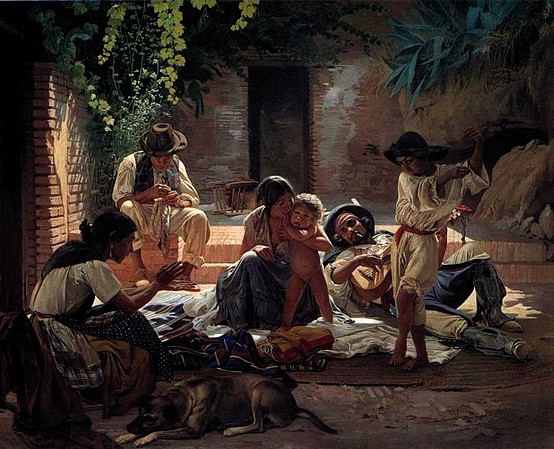
Roma Gypsy


The Romani (also Romany, Romanies, Romanis, Roma or Roms; exonym: Gypsies; Romani: Romane or Rromane, depending on the dialect) are an ethnic group living mostly in Europe, who trace their origins to medieval India.

The Romani are widely dispersed with their largest concentrated populations in Europe, especially the Roma of Central and Eastern Europe and Anatolia, followed by the Iberian Kale in Southwestern Europe and Southern France, with more recent diaspora populations in the Americas and, to a lesser extent, in other parts of the world.

Their Romani language is divided into several dialects, which add up to an estimated number of speakers larger than two million.[17] The total number of Romani people is at least twice as large (several times as large according to high estimates), and many Romani are native speakers of the language current in their country of residence, or of mixed languages combining the two. *wikipedia*


 Contemporary scholars have suggested one of the first written references to the Roma, under the term "Atsingani", (derived from the Greek atsinganoi), dates from the Byzantine era during a time of famine in the 9th century.
In the year 800 A.D., Saint Athanasia gave food to "foreigners called the Atsingani" near Thrace. Later, in 803 A.D., Theophanes the Confessor wrote that Emperor Nikephoros I had the help of the "Atsingani" to put down a riot with their "knowledge of magic"."Atsinganoi" was used to refer to itinerant fortune tellers, ventriloquists and wizards who visited the Emperor Constantine IX in the year 1054. The hagiographical text, The Life of St. George the Anchorite, mentions that the "Atsingani" were called on by Constantine to help rid his forests of the wild animals which were killing off his livestock. They are later described as sorcerers and evildoers and accused of trying to poison the Emperor's favorite hound.

Karsilamas

The term "karsilamas" comes from the Turkish word "karsilama" meaning "face to face greeting" and is often used as a slang word designating the pickpocket's method of knocking against someone to steal his wallet. The Greek name of the dance is Antikristos Makedonikos, meaning "face to face dance from Macedonia."
The dance was popular around Constantinople (now İstanbul, Turkey) during Byzantine times. Originally a warlike dance, the Turks adopted it when they conquered the area.
 

Kostas Macedonas - Gynaika

Greek Warriors

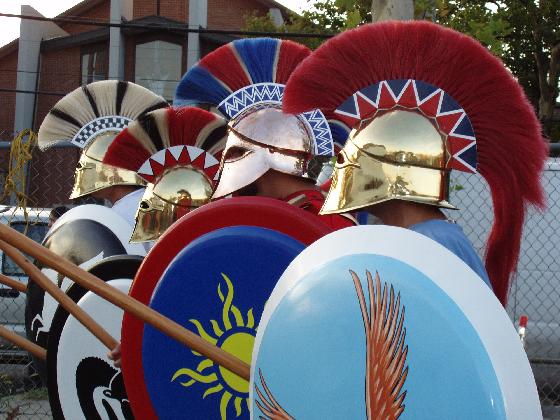
The Greek Warriors is a living history organization based in the New York City area. We represent Ancient Greek warriors in full Greek armor from head to toe. Spears, shields, and Corinthian helmets with tall horse hair crests, are all part of having a living history demonstration performed for you. See ancient Greek warriors live! We are available for the following kinds of events:

 
Film and Television
Greek Civic and Cultural Events
Greek Festivals - one of our favorite types of events
Advertisement
Conventions and Special Events

Arachne

 There was a certain maiden of Lydia, Arachne by name, renowned throughout the country for her skill as a weaver. She was as nimble with her fingers as Calypso, that nymph who kept Odysseus for seven years in her enchanted island. She was as untiring as Penelope, the hero's wife, who wove day after day while she watched for his return. Day in and day out, Arachne wove too. The very nymphs would gather about her loom, naiads from the water and dryads from the trees.
"Maiden," they would say, shaking the leaves or the foam from their hair, in wonder, "Pallas Athena must have taught you!"
But this did not please Arachne. She would not acknowledge herself a debtor, even to that goddess who protected all household arts, and by whose grace alone one had any skill in them.
"I learned not of Athena," said she. "If she can weave better, let her come and try."
The nymphs shivered at this, and an aged woman, who was looking on, turned to Arachne.
"Be more heedful of your words, my daughter," said she. "The goddess may pardon you if you ask forgiveness, but do not strive for honours with the immortals."
Arachne broke her thread, and the shuttle stopped humming.
"Keep your counsel," she said. "I fear not Athena; no, nor any one else."
As she frowned at the old woman, she was amazed to see her change suddenly into one tall, majestic, beautiful,—a maiden of grey eyes and golden hair, crowned with a golden helmet. It was Athena herself.
The bystanders shrank in fear and reverence; only Arachne was unawed and held to her foolish boast.
In silence the two began to weave, and the nymphs stole nearer, coaxed by the sound of the shuttles, that seemed to be humming with delight over the two webs,—back and forth like bees.
They gazed on the loom where the goddess stood plying her task, and they saw shapes and images come to bloom out of the wondrous colours, as sunset clouds grow to be living creatures when we watch them. And they saw that the goddess, still merciful, was spinning, as a warning for Arachne, the pictures of her own triumph over reckless gods and mortals.
In one corner of the web she made a story of her conquest over the sea-god Poseidon. For the first king of Athens had promised to dedicate the city to that god who should bestow on it the most useful gift. Poseidon gave the horse. But Athena gave the olive,—means of livelihood,—symbol of peace and prosperity, and the city was called after her name. Again she pictured a vain woman of Troy, who had been turned into a crane for disputing the palm of beauty with a goddess. Other corners of the web held similar images, and the whole shone like a rainbow.